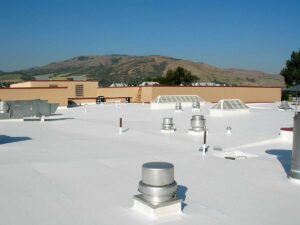
When it comes to protecting and extending the life of a commercial roof, building owners across St. Charles and the greater St. Louis area often turn to roof coatings. Among the most popular options is silicone roofing. At Schneider Roofing, we are frequently asked about the pros and cons of silicone roof coatings and whether this option is a good fit for Missouri’s unique climate. Below, we’ll break down the benefits and drawbacks, address common concerns, and help you decide if this solution is right for your business.
To learn more about commercial roof coatings and find out what is best for your roofing system, contact our experts online or by phone today.
What Are Silicone Roof Coatings?
Silicone roof coatings are a liquid-applied product that creates a seamless, waterproof membrane across your existing roof. They are often used to restore aging flat or low-slope commercial roofs, such as TPO, EPDM, PVC, or metal systems. Once cured, the coating provides excellent resistance against ponding water, UV rays, and temperature extremes, making it a popular choice for the unpredictable weather we see in St. Louis.
The Pros of Silicone Roof Coatings
Silicone coatings are chosen for good reason. Here are some of the key advantages of silicone roof coatings:
Superior Waterproofing
Silicone is highly resistant to ponding water, which is critical for flat roofs in St. Louis that may experience heavy rain or melting snow. Unlike some other coatings, silicone does not soften or degrade when exposed to standing water.
UV and Heat Resistance
Silicone reflects UV rays, helping to reduce roof surface temperatures and energy costs. This makes it especially useful during the hot and humid St. Louis summers, keeping your building cooler and reducing strain on your HVAC system.
Learn more about reflective roof coatings.
Extends Roof Lifespan
Applying a silicone coating can add 10–15 years of life to an existing roof by protecting the underlying materials from weathering, leaks, and deterioration.
Environmentally Friendly
Since silicone coatings allow you to restore rather than replace a roof, they help reduce landfill waste. Many are also low-VOC, making them safer for the environment.
Cost-Effective
Compared to full roof replacement, silicone coatings are typically more affordable, allowing you to maximize the life of your roof without the expense of tearing off and replacing existing materials.
The Cons of Silicone Roof Coatings
While there are many benefits, silicone roof coatings are not the perfect solution for every building. Here are some drawbacks and cons of silicone roof coatings to consider:
Slippery Surface
Once cured, silicone can become slippery when wet, creating a potential safety hazard for maintenance crews. Extra care or safety measures may be required when accessing the roof.
Dirt Accumulation
Silicone coatings tend to attract dirt and debris, which can reduce their reflective properties over time. Routine cleaning may be required to maintain performance.
Limited Adhesion to Certain Surfaces
Silicone does not always adhere well to other types of coatings. If your roof already has a coating in place, additional preparation or a primer may be necessary.
Higher Upfront Cost Than Some Alternatives
Although less expensive than full replacement, silicone coatings can be more costly than acrylic coatings. However, their durability often makes them a better long-term investment.
Is Silicone Right for St. Louis Roofs?
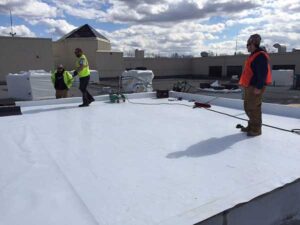
In climates like St. Louis, where roofs face temperature swings, humidity, storms, and snow, silicone coatings often perform very well. Their waterproofing and UV resistance make them especially effective. However, every roof is different, and the best solution depends on the current roof type, condition, and long-term goals of the building owner.
At Schneider Roofing, we assess each roof individually and recommend solutions tailored to your needs. Whether silicone, acrylic, or another system is best, our team ensures you get a solution that balances cost, performance, and longevity. Contact us for help choosing the best silicone roof coating for your needs.
Frequently Asked Questions About Silicone Roof Coatings
How long does a silicone roof coating last?
With proper application and maintenance, silicone roof coatings can last 10–15 years before needing reapplication.
Can silicone coatings be applied to any roof?
Silicone works best on flat and low-slope commercial roofs, including TPO, EPDM, PVC, and metal systems. However, surface preparation is critical to ensure proper adhesion.
Will a silicone coating stop leaks?
Yes, silicone roof coatings are seamless and waterproof, making them highly effective at stopping leaks and preventing future water damage.
Does applying a silicone coating void my roof warranty?
In some cases, yes, especially if the manufacturer requires specific maintenance or prohibits certain coatings. Our team reviews warranty details with you before recommending silicone.
How do I maintain a silicone-coated roof?
Maintenance is minimal but important. Periodic inspections, debris removal, and occasional cleaning are usually all that’s required to keep your coating performing well.
Learn More About the Pros and Cons of Silicone Roof Coatings
Choosing the right roof coating can save thousands of dollars and years of headaches for commercial property owners. If you’re weighing the pros and cons of silicone roof coatings in St. Charles or the greater St. Louis area, Schneider Roofing can help. Our experienced team will evaluate your roof, explain your options, and recommend the best solution for your property.
Contact Schneider Roofing today online or by calling our roofing company at (314) 378-6623 to schedule a consultation and find out whether silicone roof coatings are right for your business.